
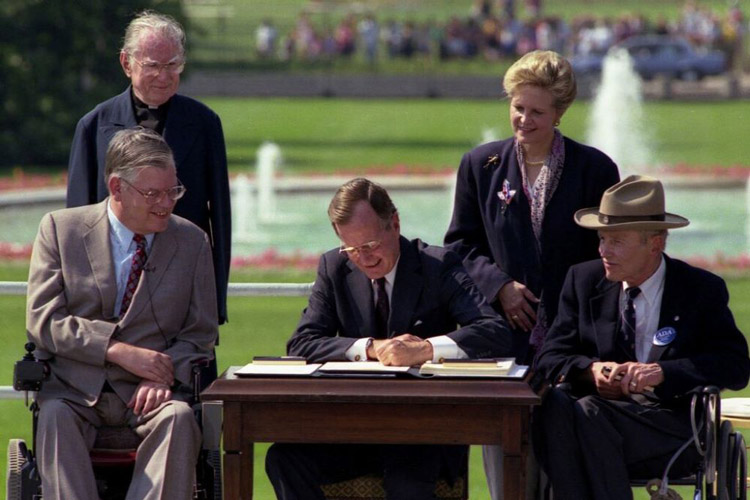
Each year on July 26, we recognize the anniversary of the Americans with Disabilities Act (ADA), one of the most significant civil rights laws in our nation’s history. Signed into law in 1990, the ADA protects the rights of people with disabilities and helps ensure equal access to employment, transportation, public spaces, education, and community life.
The ADA changed what accessibility looked like in America. Curb cuts, accessible entrances, workplace protections, and accommodations have helped open schools, workplaces, businesses, and public spaces to millions of people. These changes reflect decades of advocacy, leadership, and progress. Thirty-six years later, the ADA remains as important as ever.
The ADA Changed What is Possible
Before the ADA, many people with disabilities faced barriers that limited where they could go, where they could work, and how fully they could participate in community life. The law helped establish accessibility and inclusion as rights rather than privileges. As a result, people with developmental disabilities have greater opportunities to work, learn, engage in their communities, and pursue lives that reflect their goals and interests.
The ADA helped change expectations about what is possible and who belongs.
Access Is the Foundation, Not the End Goal
The ADA created important protections, but access alone does not guarantee opportunity.
A ramp can provide access to a building, transportation accommodations can make it easier to reach a destination, and workplace protections can help open doors to employment. While these advances matter, true inclusion requires more than access.
People with developmental disabilities still face challenges related to housing, employment, social connection, transportation, healthcare, and long-term supports. The conversation has evolved from, “Can someone get in the door?” to, “Can they fully participate once they get there?”
Building Communities Where Everyone Belongs
Inclusion is built through everyday experiences. It looks like meaningful employment, stable housing, strong relationships, community participation, and opportunities to make choices about daily life.
These experiences are connected. Housing affects employment, employment can support greater independence and community involvement. Consistent support helps create the stability individuals need to pursue goals and opportunities.
When these pieces work together, people are better positioned to build lives marked by security, belonging, and purpose.
Continuing the Promise of the ADA
The ADA anniversary is both a celebration and a reminder. It is an opportunity to honor the advocates, leaders, families, and allies who helped expand opportunities for millions of people with disabilities.
It is also a reminder that progress requires continued effort. As communities, policymakers, employers, and service providers look ahead, the focus should not only be on compliance. It should be on creating conditions where people with developmental disabilities can fully participate in community life and pursue the futures they choose for themselves.
At AbleLight, we remain committed to supporting people with developmental disabilities through person-focused services, advocacy, and community partnerships. The ADA helped create new opportunities for millions of people, and its promise continues today. Together, we can continue building communities where people with developmental disabilities are welcomed, valued, and supported in pursuing the lives they choose for themselves.