
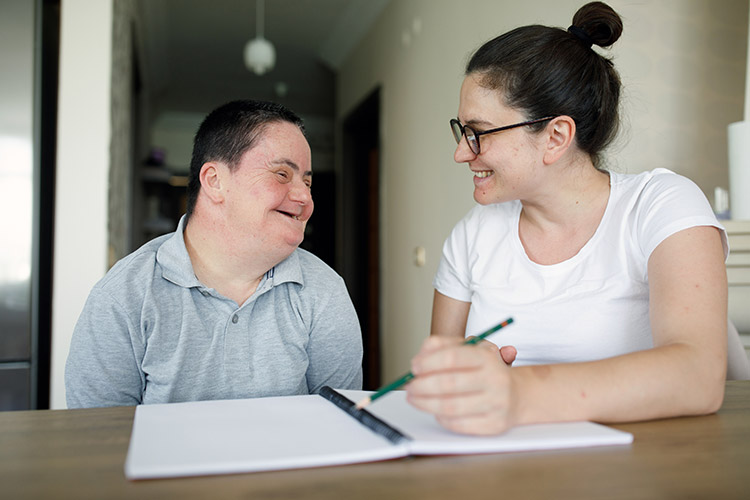
When you care deeply about someone, helping can become second nature. You know their routines, recognize what they need, and are often able to anticipate a request before they have even expressed it.
For parents, guardians, providers, and caregivers supporting people with developmental disabilities, that familiarity can be incredibly valuable. It often comes with years of listening, observing, learning, and adapting as needs change. Self-advocacy adds another dimension to that support by helping ensure the person has meaningful opportunities to express what they want, need, and prefer and to influence decisions about their own life.
Finding that balance isn’t always simple. The best approach may depend on the decision, the individual, and even what is happening that day. Someone who confidently makes choices in one part of their life may want more guidance in another, and that can change with time and experience.
Supporting self-advocacy isn’t about stepping away from the support someone relies on or adding more to an already full plate. It’s about noticing the moments when their voice can play a larger role and finding ways to support that involvement that feel natural.
Looking for meaningful opportunities for choice
Each day is full of decisions. Some require careful thought and significant support, while others leave more room for personal preference. Self-advocacy doesn’t require creating additional decisions. There are already many parts of everyday life where someone’s preferences can help guide what happens, including activities, relationships, purchases, community involvement, schedules, how they express themselves, or the support they receive.
How someone participates in those decisions will vary. While one person may feel comfortable considering several possibilities, someone else may prefer to compare a few options, receive information in a different way, talk through something, or simply have more time to think.
Meaningful choice isn’t about expecting someone to make every decision independently. It’s about making sure their preferences can genuinely help shape what happens. Over time, participating in decisions can also help someone learn what works for them and build confidence about expressing their wishes or needs.
Recognizing the many ways people communicate
Having a voice does not always mean expressing a preference through spoken words. There are many different ways to communicate, including speech, gestures, facial expressions, pictures, communication devices, behavior, or a combination of approaches. Families and caregivers may already know many ways the person they support communicates what is working, what isn’t, and what they prefer.
Sometimes a little more time, a familiar way of presenting information, or another way to communicate can make it easier for someone to show what they think or want. And sometimes, the answer may be unexpected. Listening and understanding means leaving room for those preferences to matter, even when they are different from what others anticipated.
Find the right support for the decision
Decision-making isn’t all or nothing. What someone needs can depend on the decision itself. A familiar choice may feel straightforward, while something new, complicated, or higher stakes may take more conversation, information, or time.
Support can take many forms. It may mean explaining information more clearly, talking through possibilities, or breaking complicated decisions into smaller parts. Supported decision-making recognizes that receiving help does not have to mean giving up involvement in decisions about one’s own life.
When it would be helpful, a few questions can guide the conversation:
- What information could make this choice clearer?
- Is there a way to present the options that work better for this person?
- Which part of the decision does the person want to direct?
There isn’t one right way to provide support. What feels helpful will depend on the person and the decision in front of them.
Leave room for preferences to change
Knowing someone well can make it easier to recognize what they enjoy, what works for them, and what makes them comfortable. But preferences can evolve with time or new experiences.
Someone may discover new interests, want more privacy, change how they spend their time, or decide that a familiar routine doesn’t quite fit as well anymore. For families, providers, and caregivers who have thoughtfully built support over time, those changes may take some adjustment.
Staying curious about someone’s preferences can help ensure support continues to reflect who they are today.
Supporting greater self-advocacy
Self-advocacy can sound like a formal skill, but much of it takes shape in ordinary moments. Communicating preferences and having them understood, talking through decisions, and learning from different experiences can help someone better understand what works for them, feel more comfortable expressing what matters, and take a greater role in choices about their life.
There is no single model for what self-advocacy should look like. Communication, decision-making, and support needs will differ from person to person and may change throughout life.
For parents, guardians, caregivers, and providers, supporting self-advocacy doesn’t mean withdrawing. It means continuing to listen or observe, staying open to change, and recognizing opportunities for the person to have meaningful influence over what happens in their life.
Needing support and self-advocacy aren’t competing ideas. Together, they can help someone participate more fully in decisions and choices about their life.