
For many adults with developmental disabilities, daily life is shaped not only by where they live, but also by where they spend their time, who they see, and what they are able to do. Day programs play an important role in this picture. They provide structure, connection, and meaningful activity during the day, which can support both individual well-being and stronger communities.
Creating structure, purpose, and routine
Having a consistent routine is important for most people, and it can be especially helpful for adults with developmental disabilities. Day programs often provide a dependable daily rhythm that includes activities like life skills practice, recreation, social time, and community outings. This structure can reduce isolation, support mental health, and create a sense of purpose.
A study published by the MMWR shows that adults with disabilities experience higher rates of frequent mental distress than those without disabilities, often linked to stressors such as social isolation and barriers to participation in community life. Providing opportunities to engage in meaningful daytime activities can be one way to support emotional wellness and stability for people with developmental disabilities.
Building relationships and social connection
Day programs are also important spaces for connection. Many adults with developmental disabilities have limited opportunities to see friends, meet new people, or build relationships outside of their home. Day programs offer a setting where people can spend time together, share experiences, and form lasting relationships.
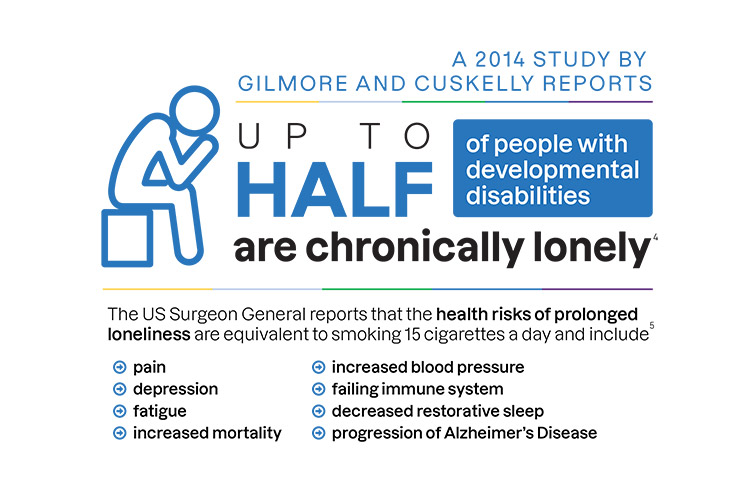
These relationships matter. Social connection has been linked to better mental and physical health outcomes in the general population, and people with developmental disabilities often face additional risk related to loneliness and exclusion (U.S. Department of Health and Human Services, Office of the Surgeon General, 2023). By creating opportunities for shared activities and group participation, day programs can help reduce social isolation and encourage a sense of belonging.
Supporting skills, independence, and confidence
Many day programs also focus on building practical and social skills that support greater independence. This can include practicing communication, learning how to navigate the community, exploring interests, and working on daily living skills. Over time, these experiences can increase confidence and open doors to other opportunities, such as employment, volunteering, or expanded community involvement.
Importantly, skill building in day programs is often person-centered. Activities can be adjusted to match individual interests and goals, so that people are not just busy, but engaged in ways that feel meaningful to them.
Benefits for the broader community
The impact of day programs extends beyond the individuals who attend. When people with developmental disabilities are visible and active in the community, everyone benefits. Community members have more opportunities to interact, learn, and build relationships. Local organizations, businesses, and faith communities that partner with day programs often discover new ways to practice inclusion in their own spaces.
These connections can shift perceptions over time, helping communities move from seeing disability as a limitation to recognizing the strengths, contributions, and perspectives that people with developmental disabilities bring.
Seeing day programs in action
At AbleLight, day programs provide adults with developmental disabilities opportunities to learn, socialize, and participate in their communities through structured daily activities and community-based experiences. Programs are tailored to the needs and interests of the people who attend, and are offered in several locations in Colorado and Kansas, including Colorado Springs, Denver, Fort Collins, and more.
To see what this looks like in practice, we invite you to watch our Day Program video below and learn more about how daytime support can foster connection, growth, and community life for people with developmental disabilities.