
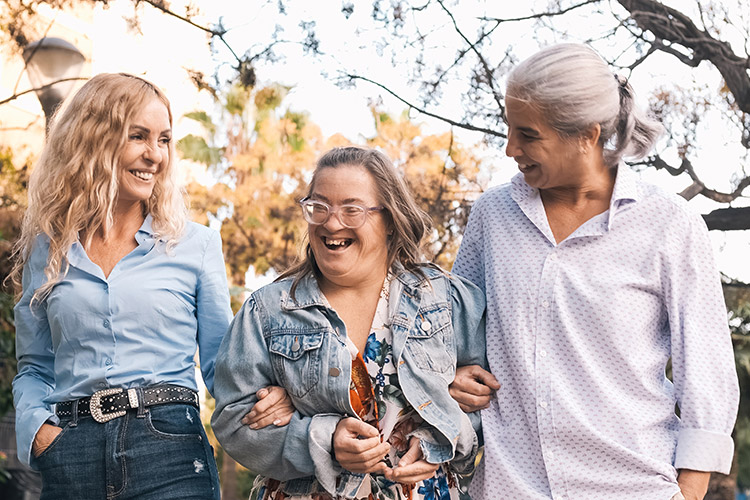
Who are the people who truly know your loved one, not only what support they may need, but what makes them laugh, what they look forward to, and the interests and experiences they enjoy sharing with others?
That question can take on greater significance when thinking about the future of someone with a developmental disability. Relationships and circumstance change, and it is natural to wonder who will remain part of your loved one’s life as the people who care for them grow older or are no longer able to provide the same level of support.
A strong circle of support cannot answer every question about what lies ahead. But it can offer something deeply valuable in any person’s life, relationships with people who know them, value them, and genuinely want to stay connected.
That circle does not have to be large or built all at once. In many cases, its beginnings may already be there.
Start with the relationships that matter
When thinking about who might be part of a lasting network, it can be easy to focus first on who could help. But the relationships that endure are often built on something much more personal.
Think about who your loved one genuinely enjoys being around. It could be a sibling, longtime friend, neighbor, coworker, someone from a faith community, or a person they’ve met through an activity they enjoy. Some of these people may offer practical support at different points in life, while others may never have that role.
A friend does not need to become a caregiver for the relationship to matter. Research on circles of support for people with intellectual disabilities highlights the value of relationships that extend beyond formal services. Family, friends, neighbors, and other personal connections can provide social connection and practical support while helping create a broader network around the person over time.
Rather than beginning only with “Who could help in the future?” consider who matters to your loved one now. Think about who they seek out, talk about, enjoy seeing, or choose to spend time with. Those patterns can offer a clearer picture of the relationships that are already meaningful in their life.
Give meaningful relationships room to grow
Strong relationships develop through shared interests, experiences, and time together. Workplaces, neighborhoods, faith communities, volunteer opportunities, recreation, and other familiar settings can give people with developmental disabilities opportunities to see the same people regularly and get to know them naturally.
Not every friendly interaction needs to become something more. When two people do form a genuine connection, there may be simple ways for that relationship to extend beyond the place or activity that first brought them together.
Sometimes two people who met through a shared activity decide to spend time together somewhere else, or coworkers choose to keep in touch beyond the workplace. The relationship itself should lead the way, with both people having a say in whether and how it develops.
That distinction matters. Strong relationships cannot be assigned a future role. They develop when people have the time and opportunity to build connections that matters to both of them.
Build trust with professional supports
Professional relationships can also be an important part of a strong circle. Direct support professionals, nurses, employment specialists, program team members, and other providers may spend significant time with your loved one and develop an understanding of how they communicate, what matters to them, and what helps them feel comfortable and supported.
Trust can make those relationships especially valuable. When individuals, those closest to them, and professionals share information and perspectives openly, everyone gains a fuller understanding of what is working and where needs may be changing.
Strong partnerships develop through consistent communication, mutual respect, and recognition that everyone brings valuable knowledge. The people closest to your loved one may be years of experience and familiarity, while providers offer professional expertise and perspectives gained through their work. Bringing those insights together can lead to more responsive, person-focused support.
Professional relationships are different from friendships and family connections, and those boundaries matter. However, trust and collaboration can make professionals a meaningful part of the broader circle around your loved one.
Help relationships continue when circumstances change
Changes in work, programs, transportation, or routines can sometimes make an important relationship harder to maintain. That does not necessarily mean the relationship has run its course.
In those moments, the question becomes whether both people still want to remain in each other’s lives and, if so, whether something practical is standing in the way. Your loved one may occasionally need assistance navigating that change, particularly when communication, transportation, or scheduling creates a barrier.
The goal is not to manage the relationship, but to avoid letting a change in circumstances end a connection that still matters to both people.
Let the circle evolve
No one’s social circle stays the same throughout life. New friendships form, some relationships become closer, interests change, and sometimes people drift apart.
As relationships change, the circle can change with them. Someone who once played a significant role may become less central, while a newer connection may grow into an important relationship.
Paying attention to who your loved one looks forward to seeing or talking with can help keep the circle grounded in the relationships that matter to them now, rather than expectations formed years earlier.
A circle built on relationships
Thinking about a time when you may no longer be able to provide the same level of support can be difficult. No one can predict exactly what life will look like years from now or which people will still stay close. Building a circle of support is not about trying to solve all of that uncertainty today.
What can develop over time is a network that includes meaningful personal relationships and trusted professional supports, with different people playing different roles as life changes.
There is reassurance in knowing someone has people around them who care, but the value of a strong circle reaches beyond knowing help may be available someday. It is about creating a life in which your loved one has relationships with people who genuinely want to be part of it.