
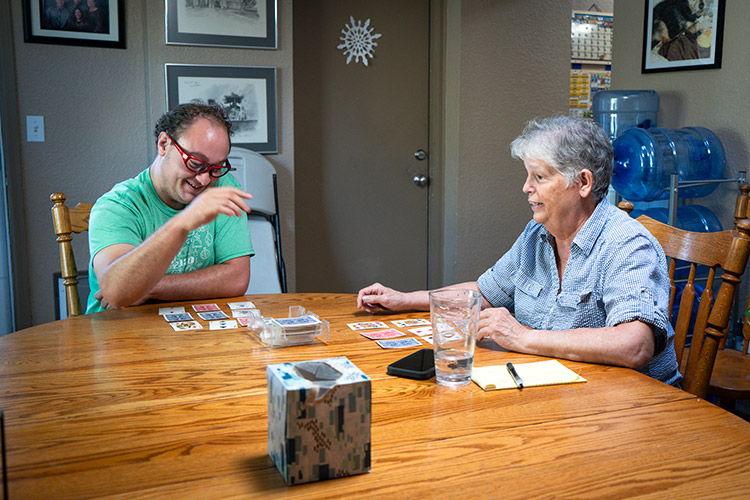
This holiday season is a time for connection and joy. Whether someone celebrates Christmas or other holidays, these traditions can be extremely meaningful. For many people with developmental disabilities, however, holidays can also bring extra stress when gatherings are loud, crowded, or not planned with accessibility in mind.
Inclusive holiday celebrations help ensure everyone has the chance to feel welcome, respected, and involved.
Start with listening
People with developmental disabilities have their own interests, traditions, and ways of experiencing the season. They belong to many different faiths and cultures and may celebrate holidays in very personal ways.
Inclusion starts by asking, not assuming. Consider questions like these:
- “What do you enjoy most about this time of year?”
- “Is there anything that feels hard or overwhelming about holiday gatherings or the holidays?”
Their answers can help families, caregivers, and communities shape celebrations that reflect each person’s preferences and comfort level.
Support sensory and emotional comfort
Holiday events often include bright lights, music, and changes in routine. For some individuals, especially those with sensory sensitivities or communication differences, this can feel overpowering. A few simple supports can make a big difference:
- Offer a quiet space where someone can take a break
- Have familiar items available, such as headphones, something they like, or a sensory tool
- Share details ahead of time about who will be there, what to expect, and how long the event will last
These adjustments help create a setting where more people can relax and enjoy being together.
Make worship and spiritual practices accessible
Participating in worship, prayer, or other spiritual practices can be an important part of Christmas or other holiday observances. Barriers such as transportation, physical access, or unfamiliar routines in faith communities can make this difficult for people with developmental disabilities.
Families, caregivers, and congregations can work together to:
- Ensure entrances, seating, and restrooms are accessible
- Offer large print or visual materials to help people follow along
- Prepare ushers, greeters, and volunteers to welcome people who may communicate or move differently
- Explore ride sharing or transportation support when possible
These steps help people participate in the spiritual life of their community in ways that feel meaningful and safe. For congregations and caregivers who are looking for practical tools, AbleLight’s Faith Resources Library offers downloadable Bible studies, devotionals, and other materials created specifically for adults with developmental disabilities.
Choose traditions that build connection
Inclusive holiday celebrations do not have to be elaborate. Often, simple traditions are the most meaningful, such as:
- Baking as a favorite treat together
- Driving to see the neighborhood lights
- Listening to holiday music or reading a seasonal story
- Doing a craft, game, or service project as a group
The goal is to build moments of connection, not to fit into one “perfect” picture of how the holidays should look.
Honoring choice, voice, and belonging
At the heart of inclusive holidays is belonging. People with developmental disabilities should have a real say in how they spend their time, which activities they join, and what helps them feel comfortable.
When we listen, adapt, and make room for different needs, we send a clear message. Every person is valued. Each person’s traditions, needs, and hopes for the season matter.
This holiday season, whether you are planning a family gathering, a faith service, or a community event, small and thoughtful choices can help people with developmental disabilities feel loved, secure, and included in the celebrations you share.